|
Hello, fellow traveler on this wild and beautiful journey of parenthood. If you're here, chances are you've experienced that universal parent moment: a time when you’ve felt utterly lost, questioning every decision, and desperately wishing your child came with an instruction manual. I see you, because I have been you. In the quiet moments after a toddler tantrum has subsided, or in the middle of a frustrating power struggle with a determined child, I too have reached for guidance, for a reassuring voice to tell me I’m not alone and that there is a better way.
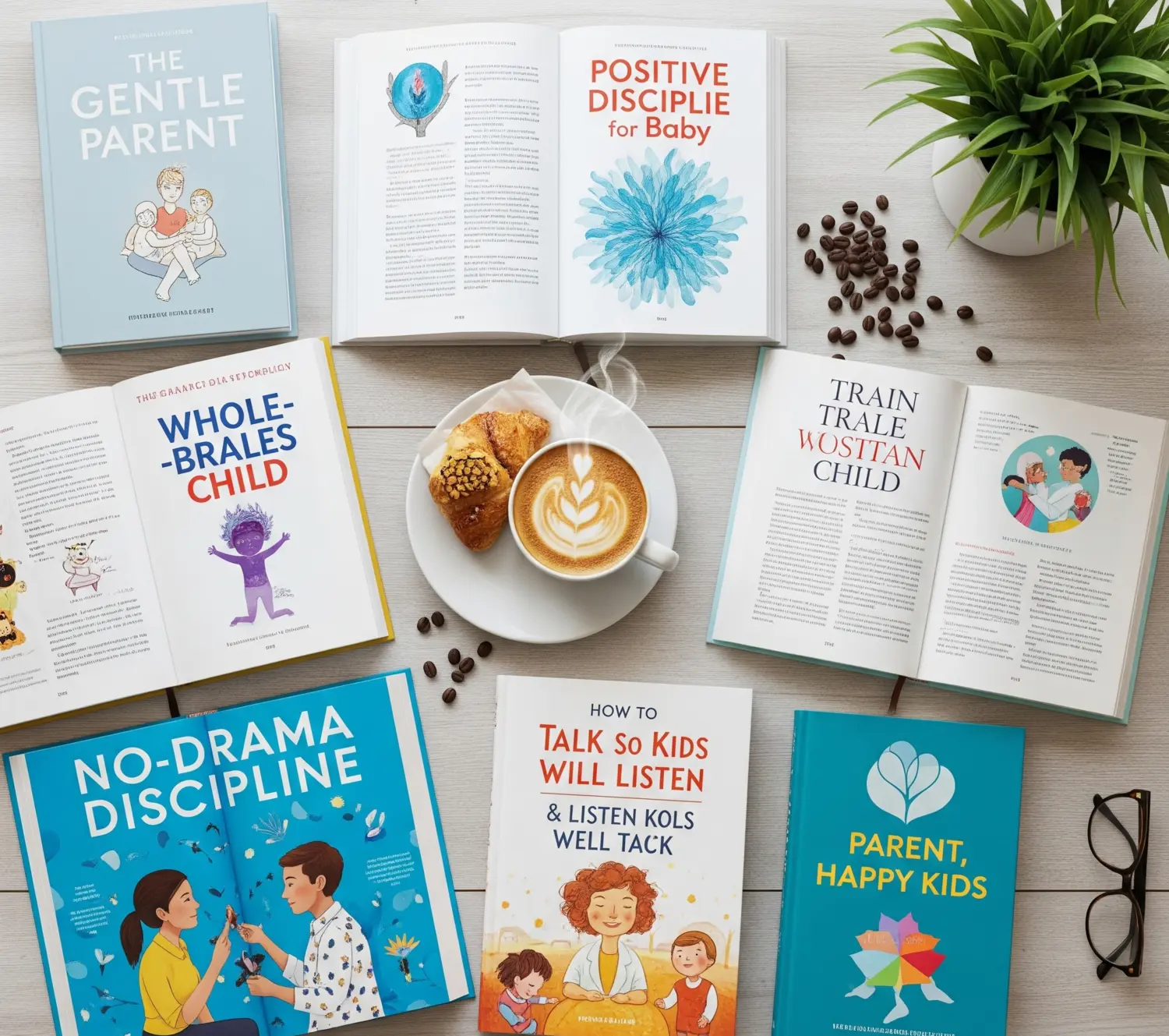
The world of parenting advice is a noisy one. It’s filled with conflicting opinions, fleeting trends, and enough information to make your head spin. But amidst the noise, there are true gems—books written with such wisdom, empathy, and psychological insight that they don't just offer tips; they fundamentally shift your perspective. They are the lighthouses that guide you back to what matters most: your connection with your child.
As a mom who has built her parenting library one desperate Amazon order at a time, I’ve sifted through countless pages to find the ones that truly work. These aren't books that promise a "quick fix" or a "perfect child." Instead, these are the 7 best parenting books that offer a profound understanding of your child's inner world and provide you with the real, practical tools to build a relationship based on trust, respect, and unconditional love. Let’s dive into the books that will not only change your parenting but will also enrich your family's life for years to come.
Exploring the Best Parenting Books for a Connected Family
Each of these books offers a unique lens through which to view your child and your role as a parent. Whether you are struggling with discipline, communication, or simply understanding your child's big emotions, there is a book here that will speak to your heart.
1. How to Talk So Kids Will Listen & Listen So Kids Will Talk by Adele Faber and Elaine Mazlish
If you were to only read one book on this list, this would be it. This is the undisputed classic, the holy grail of communication. First published decades ago, its advice is timeless because it’s based on a simple, revolutionary idea: treating children with the same respect you would an adult. Faber and Mazlish provide incredibly practical, actionable strategies complete with relatable examples and even helpful cartoons that make the concepts stick.
- Core Philosophy: The book teaches you how to move away from communication roadblocks (like lecturing, blaming, and dismissing) and towards skills that foster cooperation and connection. It’s about validating your child's feelings, engaging their cooperation instead of demanding it, and finding alternatives to punishment.
- Why It's One of the Best Parenting Books:
- Focus on Feelings: It all starts with acknowledging your child's emotions. Instead of saying, "Don't be sad, you're fine," the book teaches you to say, "You seem so sad that your toy broke. I understand." This simple act of validation is a game-changer for de-escalating meltdowns and building emotional intelligence.
- Practical Scripts: It’s filled with "instead of this, try this" scenarios. For example, instead of ordering, "Clean your room now!" you learn to describe the problem ("I see a big pile of clothes on the floor") or give a choice ("Would you like to start with the books or the blocks?").
- Problem-Solving Together: It empowers you to work with your child to solve problems, rather than imposing solutions upon them. This builds their confidence and critical-thinking skills.
- A Mom’s Honest Take: This book transformed my relationship with my children. I realized how often I was dismissing their feelings in an attempt to "fix" their problems. The tools in this book feel a little like learning a new language at first, but once they become second nature, the reduction in yelling and power struggles is astounding. It’s a book I revisit often, and each time, I learn something new.
2. The Whole-Brain Child by Daniel J. Siegel, M.D., and Tina Payne Bryson, Ph.D.
Have you ever wondered why your toddler is having a massive tantrum over the color of their cup? The Whole-Brain Child explains the neuroscience behind these baffling behaviors in a way that is incredibly easy to understand and apply. Neuropsychiatrist Dr. Dan Siegel and parenting expert Dr. Tina Payne Bryson give you a peek inside your child’s developing mind, and in doing so, they give you the gift of empathy and effective strategies.
- Core Philosophy: The book explains how a child's brain is still under construction, particularly the parts responsible for emotional regulation and rational thinking (the "upstairs brain"). It provides 12 strategies to help you integrate the different parts of the brain—the logical left with the emotional right, and the primitive downstairs with the thoughtful upstairs—to foster well-rounded and resilient kids.
- Why It's One of the Best Parenting Books:
- Turns Tantrums into Opportunities: This book reframes challenging moments as opportunities for connection and teaching. For example, it teaches the "Connect and Redirect" strategy: first, connect with the emotional right brain ("You are so angry right now!"), and only then redirect with the logical left brain ("Hitting is not okay. Let's hit a pillow instead.").
- Science-Backed Empathy: Understanding the "why" behind your child's behavior makes it so much easier to respond with patience instead of frustration. Knowing they aren’t giving you a hard time, but rather having a hard time, changes everything.
- Practical Tools for Emotional Health: It provides tangible techniques like the "Name It to Tame It" strategy, where you help your child tell the story of what frightened or angered them to help them make sense of their big feelings.
- A Mom’s Honest Take: This book was a lightbulb moment for me. It gave me a framework for understanding my child's development that was rooted in science, not just opinion. The illustrations are fantastic, and the strategies are simple enough to remember in the heat of the moment. It’s the perfect blend of science and soul.
3. No-Drama Discipline by Daniel J. Siegel, M.D., and Tina Payne Bryson, Ph.D.
From the same brilliant authors as The Whole-Brain Child, this book focuses specifically on the hot-button issue of discipline. It challenges the very idea of traditional punishment (like timeouts and consequences that are unrelated to the behavior) and redefines discipline as what it truly should be: teaching.
- Core Philosophy: The goal of discipline should not be to punish, but to teach. The book argues that punishment often triggers a reactive state in a child's brain, making it impossible for them to learn. Instead, it advocates for a connected, empathetic approach that addresses the behavior while preserving the parent-child relationship.
- Why It's One of the Best Parenting Books:
- Moves Beyond Timeouts: It explains why timeouts often backfire by isolating a child when they most need connection. It offers a positive alternative: the "time-in," where you sit with your child, help them calm down, and then talk about what happened.
- Curiosity Over Accusation: It teaches you to ask "why" questions to understand the need behind the behavior. Why did your child hit their sibling? Instead of assuming malicious intent, you get curious. Were they feeling left out? Did they lack the words to express their frustration?
- Focus on Skill-Building: True discipline is about building skills—impulse control, empathy, problem-solving. This book gives you the tools to teach these skills proactively, not just reactively in moments of conflict.
- A Mom’s Honest Take: This book healed my own anxieties around discipline. I grew up with a more punitive style of parenting, and I struggled to find a path that felt both effective and kind. No-Drama Discipline provided that path. It’s a compassionate guide that helps you parent from a place of love, even when your child is pushing every button you have.
4. Peaceful Parent, Happy Kids by Dr. Laura Markham
Dr. Laura Markham’s approach is centered on the idea that a strong, loving connection with your child is the most powerful tool you have. Her work is a beautiful guide to fostering that connection while setting firm, respectful limits. This is the book for parents who want to stop yelling and start connecting.
- Core Philosophy: The book is structured around three main ideas: 1) Regulating your own emotions (you can't be a calm parent if you're not calm yourself), 2) Fostering a deep connection with your child, and 3) Coaching, not controlling, your child's behavior.
- Why It's One of the Best Parenting Books:
- It Starts with YOU: Dr. Markham emphasizes that peaceful parenting begins with the parent. She provides practical advice on managing your own anger and triggers, which is often the hardest part of parenting.
- Connection is the Key: She offers wonderful, tangible ways to build connection into your daily life, such as "Special Time" (10-15 minutes of one-on-one, child-led play) and using play to diffuse tense situations.
- Limits with Empathy: This book excels at teaching you how to set boundaries with kindness. You can say "no" to the behavior while saying "yes" to the feelings behind it. For example, "The answer is no, we are not having more cookies. I know that's really disappointing. It's okay to be sad about it. I'm right here with you."
- A Mom’s Honest Take: Dr. Laura’s voice is like a warm hug. This book gave me permission to be the gentle parent I wanted to be and showed me how to do it effectively. The focus on my own emotional regulation was revolutionary. It’s a book that not only improves your parenting but also encourages your own personal growth.
5. The Book You Wish Your Parents Had Read by Philippa Perry
British psychotherapist Philippa Perry has written a wonderfully witty, insightful, and refreshingly honest guide to modern parenting. She draws on her decades of clinical experience to explore how our own upbringings shape our parenting and how we can break negative cycles to build the best possible relationship with our children.
- Core Philosophy: The quality of your relationship with your child is paramount. Perry focuses on validating all feelings (both yours and your child's), repairing ruptures in the relationship when they inevitably happen, and understanding that all behavior is a form of communication.
- Why It's One of the Best Parenting Books:
- Focus on Repair: Perry normalizes the fact that we will all mess up. We will yell, we will be unfair, we will get it wrong. The most important thing is not to be a perfect parent, but to go back and "repair" the connection. A sincere apology can be one of the most powerful teaching moments.
- Understanding Your Past: It gently encourages you to look at your own childhood to understand your triggers and ingrained patterns. This self-reflection is key to becoming a more conscious and intentional parent.
- Brutally Honest and Relatable: Her writing is free of jargon and full of real-life examples. It feels like you're having a conversation with a very wise, non-judgmental friend who isn't afraid to tell it like it is.
- A Mom’s Honest Take: This book felt like a therapy session in the best possible way. It made me feel seen and understood, both as a parent and as a person who was once a child. The chapter on repair is something I think every parent on the planet should read. It’s a liberating and profoundly comforting book.
6. Simplicity Parenting by Kim John Payne, M.Ed.
In today's fast-paced, consumer-driven world, many families are feeling overwhelmed. Simplicity Parenting is the antidote. It offers a graceful and effective way to simplify your home, your schedule, and your life to reduce your child's stress and allow their true personality to shine.
- Core Philosophy: Too much stuff, too many choices, too much information, and too much speed are creating anxiety and behavioral issues in children. By simplifying a child's world, you can create the space and calm they need to thrive.
- Why It's One of the Best Parenting Books:
- Decluttering the Environment: It provides a practical guide to decluttering the playroom. Payne argues that fewer toys lead to deeper, more creative play.
- Creating Rhythm and Predictability: The book emphasizes the importance of a predictable daily rhythm. Rhythms (as opposed to rigid schedules) create a sense of security and calm for children, reducing power struggles around meals, bedtime, and transitions.
- Scaling Back Schedules: It’s a powerful call to resist the pressure to overschedule our children with endless activities, and instead to protect the sanctity of downtime and free play.
- A Mom’s Honest Take: This book was a breath of fresh air. It gave me the confidence to push back against the "more is more" culture. We drastically reduced the number of toys my kids had, and I was amazed to see their creativity blossom. Implementing a stronger daily rhythm brought a noticeable sense of peace to our home. It's a must-read for any parent feeling burnt out by the pace of modern life.
7. Hunt, Gather, Parent by Michaeleen Doucleff, Ph.D.
This book offers a fascinating and transformative look at parenting by exploring the ancient, time-tested practices of three of the world's most venerable cultures: the Maya, the Inuit, and the Hadzabe. Journalist Michaeleen Doucleff traveled with her young daughter to these communities and learned a radically different—and often more effective—approach to raising helpful, confident, and emotionally intelligent children.
- Core Philosophy: Western parenting has become overly complicated, parent-centric, and adversarial. Many ancient cultures have a more cooperative, team-based approach where children are seen as capable contributors to family life from a very young age.
- Why It's One of the Best Parenting Books:
- Fosters Intrinsic Motivation: It teaches you how to encourage kids to do chores and help out not because they are forced or rewarded, but because they genuinely want to be part of the family team. The concept of "accompanying" a child in their tasks is revolutionary.
- Radically Reduces Tantrums: It offers incredible insights into managing toddler emotions by responding with calmness and minimal intervention, teaching emotional regulation through modeling rather than lecturing.
- Builds Self-Sufficient Kids: The book challenges our tendency to constantly entertain and direct our children. It shows how to foster independence and confidence by trusting children and giving them more autonomy.
- A Mom’s Honest Take: Reading this book felt like unlearning decades of complicated, anxiety-inducing parenting advice and returning to something more natural and intuitive. The strategies for getting my toddler to enthusiastically help with chores were astonishingly effective. It is a paradigm-shifting book that will make you rethink everything you thought you knew about raising kids.
Conclusion: Your Journey, Your Guidebook
The journey of parenting is not about finding a single, perfect "method." It's about filling your toolbox with a variety of perspectives and strategies so you can choose what works best for your child and your unique family. These seven best parenting books are not meant to be rigid rulebooks, but rather compassionate guides. They will empower you, inspire you, and, most importantly, remind you that the foundation of all good parenting is a loving, respectful, and unbreakable connection with your child.
Pick the one that speaks to you most right now, and begin. You are not just raising a child; you are growing alongside them. And that is the most beautiful journey of all. Happy reading.
|